archived · Aerospace Design
Subscale Rocket Fin Assembly
Designed a mechanical fin attachment system for Project Kline's subscale vehicle, cutting fin replacement time from 24+ hours to a 30-minute hot-swap.
- SolidWorks
- Simulation
- Manufacturing
- FEA
- GD&T
- Design for Manufacturing
The problem
Last University Student Launch Initiative (USLI) season, I was tasked with researching and developing a mechanical fin attachment system for the Project Kline subscale vehicle.
In previous seasons, there had been issues with repeated fin damage and breakage after flights. This problem had to be fixed by grinding, filing, and sanding down the epoxy fillets before reattaching the replacement fins — a painful, exhausting, and hazardous 24+ hour process.
To combat this, the team decided to research a mechanical fin attachment system.
The solution
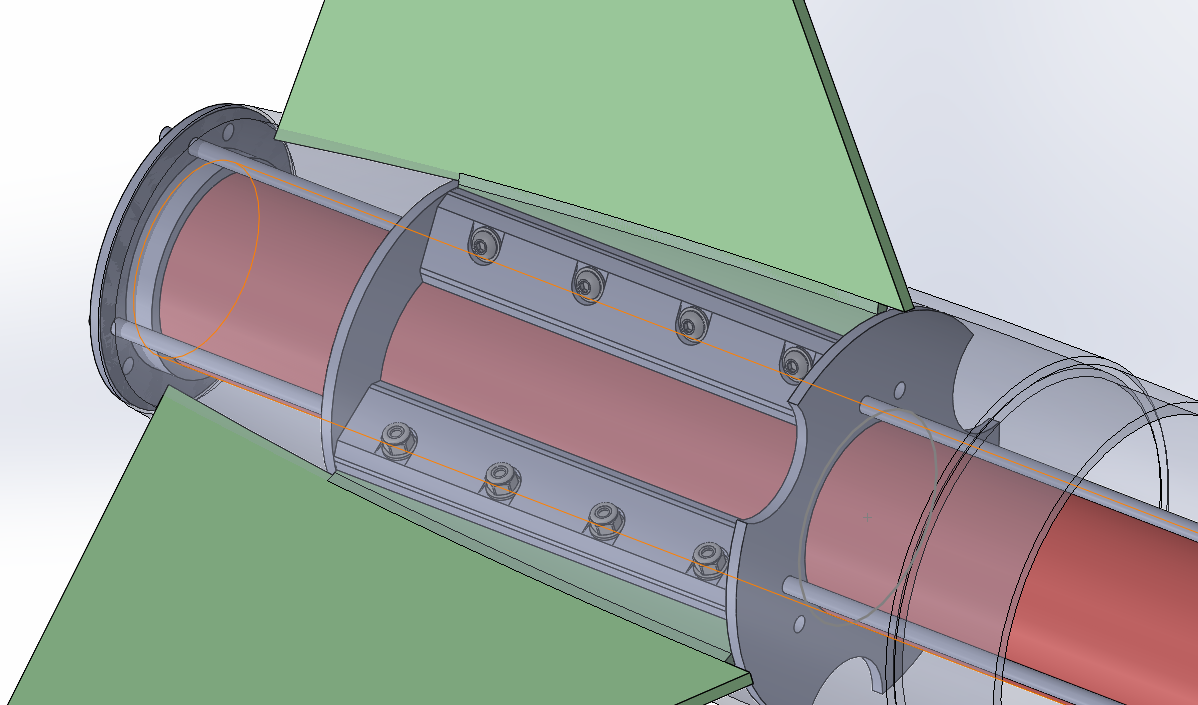
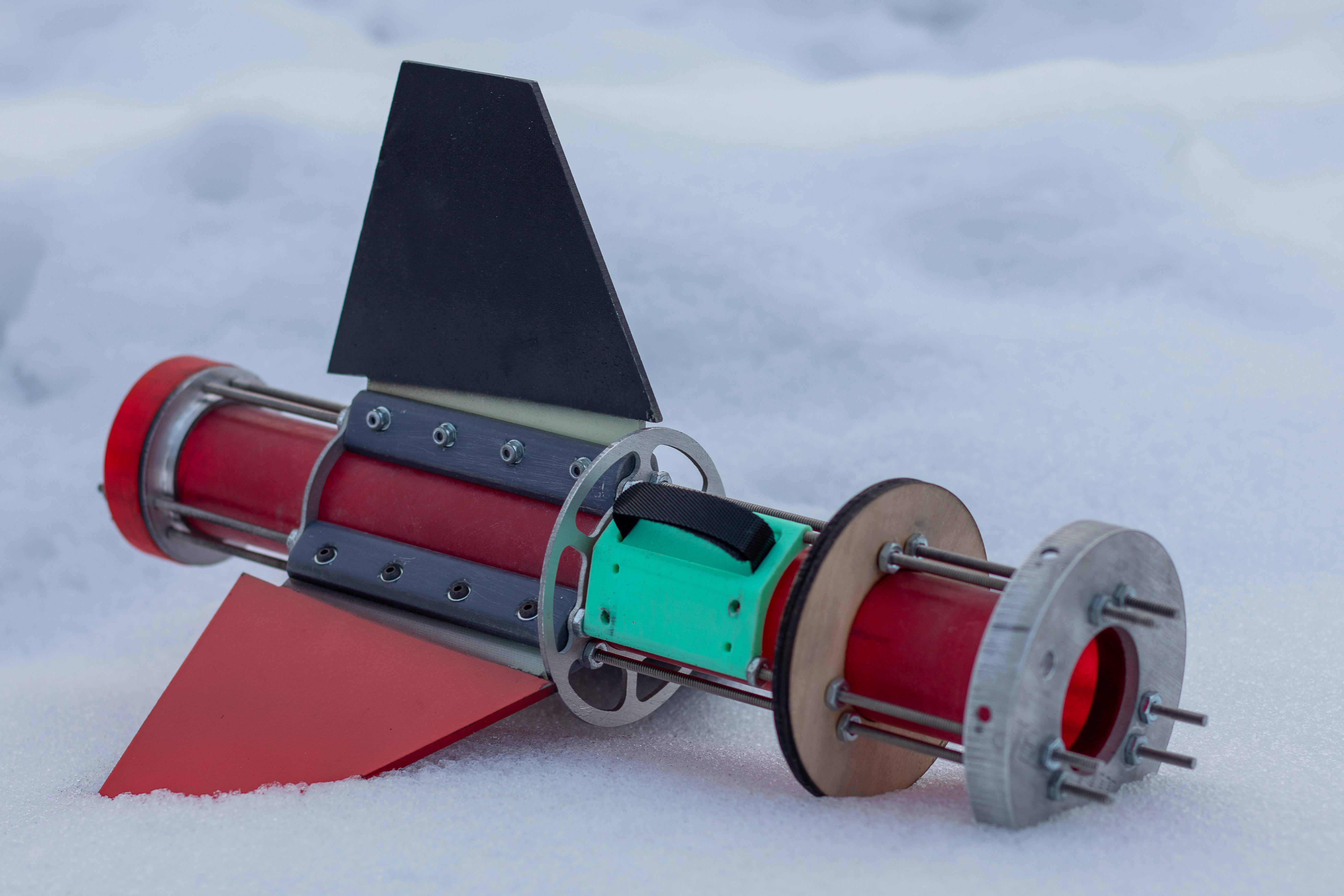
The solution I came up with (pictured above) proved to be extremely helpful on the subscale vehicle, as the team experimented with different fin shapes that could be hot-swapped within a 30-minute window at the launch site.
Outcome and trade-offs
Ultimately, while the system was useful on the subscale vehicle for testing and validating fin designs, the team chose to return to traditional epoxy bonded fins for the full-scale rocket. The decision favored flight vehicle mass savings and decreased complexity, at the cost of increased fin replacement time and labor.
What I learned
- Mechanical design under real constraints — tolerances, retention, and thermal/structural loads all had to work together in a system that could be assembled and disassembled repeatedly without degradation.
- Design for manufacturing and field use — a design that works on a bench but takes an hour to install at a launch site isn’t useful. The 30-minute hot-swap target shaped every decision.
- Engineering trade-offs — the mechanical system won on iteration speed and lost on mass. Recognizing when the trade-off favors the simpler solution is as important as building the complex one.